
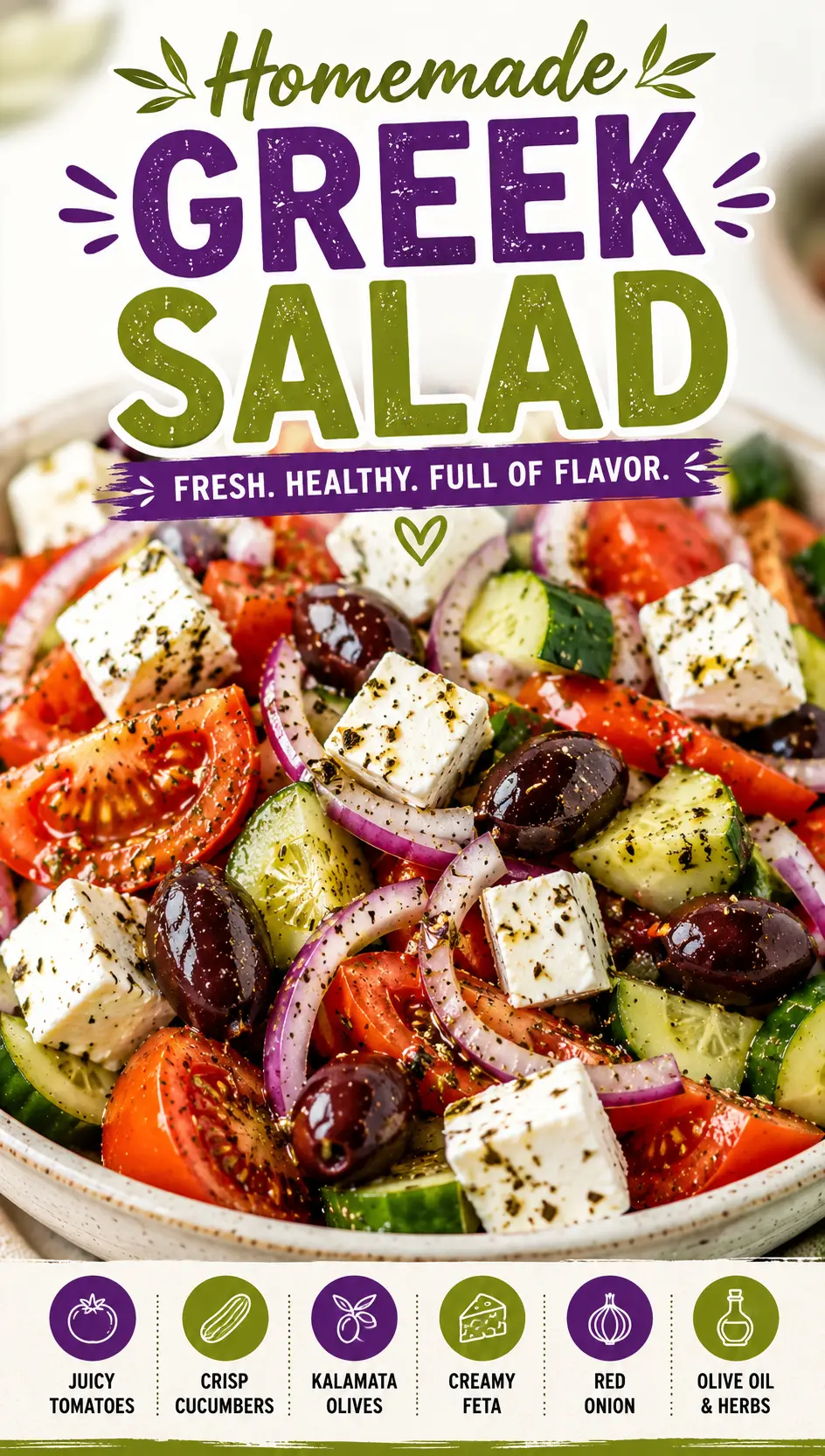
Greek salad is a timeless Mediterranean dish that delivers freshness, crunch, and bold flavor in every bite. This Greek salad recipe highlights simple ingredients like juicy tomatoes, crisp cucumbers, feta cheese, olives, and a zesty homemade dressing. Because it requires no cooking, Greek salad becomes the perfect quick meal for busy days. In this guide, you will learn how to prepare an authentic Greek salad, balance textures, and build a flavorful dressing that ties everything together. Whether you are new to Mediterranean cooking or a seasoned home cook, this Greek salad recipe brings restaurant-quality taste straight to your kitchen.
Greek Salad Ingredients & Fresh Preparation Secrets
Hello there! I’m Imaa, creator of Brood Recipes. My journey with Greek salad started after long corporate days when I craved something fresh, fast, and real. I didn’t expect a simple Greek salad to change my cooking mindset, but it did. Over time, I tested many versions of Greek salad until I found the perfect balance of crunch, saltiness, and brightness. Now, Greek salad has become one of my most trusted recipes. Every time I prepare Greek salad, I feel connected to that turning point in my life when food became joy instead of routine.
Greek salad depends entirely on fresh ingredients. Tomatoes must be ripe and juicy, cucumbers should stay crisp, and red onions need just enough sharpness to balance the dish. In a proper Greek salad, every ingredient plays a role. Because of this, quality matters more than complexity. The better your produce, the better your Greek salad tastes.
To build texture, cut vegetables into bite-sized pieces. This ensures every forkful of Greek salad includes a mix of flavor. Additionally, feta cheese should be in blocks, not crumbles, so it holds its creamy structure. Meanwhile, olives add depth and saltiness, making Greek salad more satisfying.
Greek salad dressing ties everything together. Olive oil, red wine vinegar, garlic, oregano, salt, and pepper create a bold Mediterranean flavor. Once combined, the dressing transforms a simple bowl into an authentic Greek salad experience.
Internal Links:
Explore more fresh ideas in our quick dinner recipes and discover more healthy meals in our Mediterranean recipes collection.
How to Make Greek Salad Dressing Perfect Every Time
The dressing defines Greek salad more than any single ingredient. Without a strong dressing, Greek salad feels flat and incomplete. However, when balanced correctly, it elevates every bite.
Start with extra virgin olive oil, preferably Greek, because it adds richness and authenticity. Next, add red wine vinegar for acidity. This contrast creates the signature brightness found in traditional Greek salad. Garlic adds depth, while oregano delivers the classic Mediterranean aroma. Finally, salt and black pepper bring everything together.
Let the dressing sit for at least 20 minutes before mixing it into Greek salad. This resting time allows flavors to blend properly. As a result, your Greek salad develops deeper taste and better balance.
When combining dressing with vegetables, always toss gently. Over-mixing can break the feta and soften the vegetables too much. Therefore, handle your Greek salad with care to maintain texture.
Greek salad dressing also adapts easily. If you prefer a lighter version, reduce olive oil slightly. If you enjoy stronger acidity, increase vinegar. This flexibility makes Greek salad suitable for many preferences.
Internal Links:
You can pair this salad with ideas from our healthy lunch bowls or explore flavor pairings in our salad recipes archive.
Step-by-Step Greek Salad Assembly Guide
Assembling Greek salad is simple, but technique matters. First, prepare all vegetables in advance. Slice tomatoes into wedges, cucumbers into thin rounds, and onions into fine strips. This ensures consistency in every bite of Greek salad.
Next, layer vegetables in a large bowl. Start with tomatoes, followed by cucumbers, onions, capsicum, olives, and feta. This layering helps distribute flavors evenly throughout the Greek salad.
Sprinkle dried oregano over the top before adding dressing. This step enhances aroma and ensures even seasoning. Then pour dressing gradually over the salad while gently tossing.
The key to perfect Greek salad is timing. Always serve immediately after mixing. If you let Greek salad sit too long, vegetables release water and dilute flavor.
Additionally, presentation matters. A well-arranged Greek salad looks vibrant and appetizing, making it perfect for gatherings or quick lunches.
Greek salad also works well as a side dish for grilled meats, seafood, or bread. Its freshness balances heavier dishes beautifully.
Internal Links:
Try pairing it with our easy grilled recipes or explore more sides in our easy dinner sides.
Serving Ideas, Nutrition & Storage Tips for Greek Salad
Greek salad tastes best when served fresh, but you can still prepare ingredients ahead of time. Store chopped vegetables separately and assemble just before serving. This keeps your Greek salad crisp and flavorful.
For serving, use a wide bowl to show off colors and textures. Greek salad pairs beautifully with grilled chicken, fish, or warm pita bread. You can also serve it as a light main dish for hot days.
From a nutrition perspective, Greek salad offers healthy fats, vitamins, and minerals. Olive oil provides heart-healthy fats, while vegetables supply fiber and antioxidants. Because of this, Greek salad fits well into balanced diets.
If you want a lighter version, reduce feta or use low-fat alternatives. However, traditional Greek salad relies on full flavor ingredients for authenticity.
Greek salad stores for up to one day, but texture changes over time. Therefore, always prioritize fresh preparation for best results.
Internal Links:
Discover more balanced meals in our weight-friendly recipes or explore fresh options in our summer recipes collection.
FAQs
Q1: What is a traditional Greek salad made of?
A traditional Greek salad includes tomatoes, cucumbers, onions, olives, feta cheese, and oregano with olive oil dressing.
Q2: Can I make Greek salad ahead of time?
Yes, but store ingredients separately and mix before serving to maintain freshness.
Q3: What cheese is best for Greek salad?
Block feta cheese is best because it stays creamy and holds shape better than crumbled versions.
Q4: Is Greek salad healthy?
Yes, Greek salad is rich in vegetables, healthy fats, and nutrients, making it a balanced meal option.
CONCLUSION
Greek salad remains one of the simplest yet most flavorful Mediterranean dishes. With fresh ingredients, a balanced dressing, and careful preparation, you can create an authentic Greek salad at home in minutes. This recipe proves that simplicity often delivers the best results. Whether you serve it as a side or a light meal, Greek salad brings freshness and nutrition to your table every time.
PrintGreek Salad Recipe (Fresh & Authentic Greek Salad at Home)

Fresh and authentic Greek salad with homemade Mediterranean dressing.
- Prep Time: 15 mins
- Cook Time: 0 mins
- Total Time: 15 mins
- Yield: 4-6
- Category: Salad
- Method: No-Cook
- Cuisine: Greek
Ingredients
3 tomatoes
4 cucumbers
1/2 red onion
1 green capsicum
250g feta cheese
125g olives
1 tsp oregano
3 tbsp red wine vinegar
6 tbsp olive oil
1 garlic clove
Salt and pepper
Instructions
1. Chop all vegetables into bite-sized pieces
2. Prepare dressing by mixing vinegar, oil, garlic, and oregano
3. Layer vegetables in a bowl
4. Add feta and olives
5. Pour dressing and toss gently
6. Serve immediately
Notes
Use fresh vegetables for best flavor
Do not overmix salad
Serve immediately after dressing