
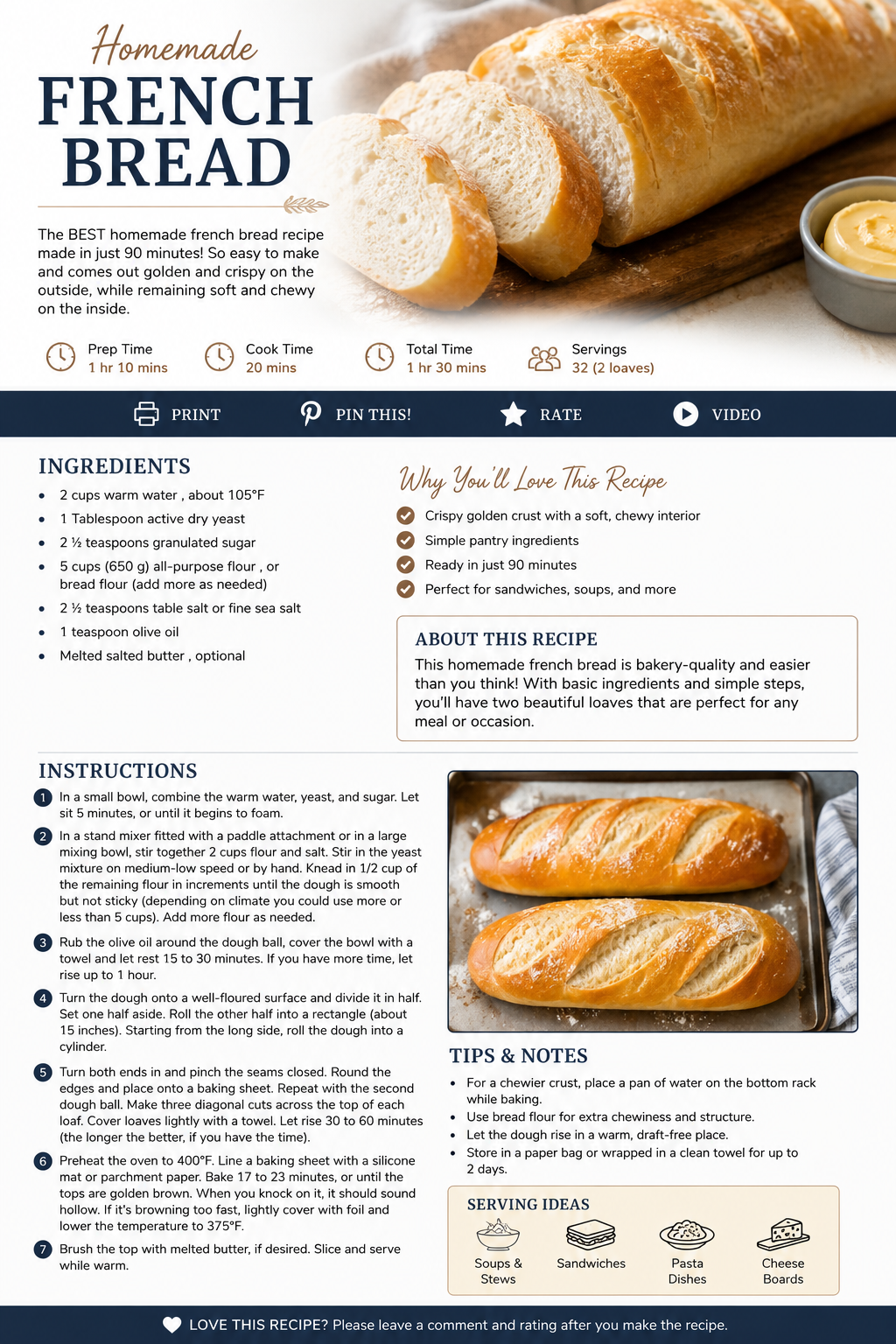
French bread is one of the most iconic homemade bread recipes because it delivers a crispy golden crust and a soft, chewy interior. This french bread recipe requires simple pantry ingredients and produces bakery-quality loaves in only 90 minutes. Homemade french bread tastes incredible fresh from the oven and works perfectly for sandwiches, garlic bread, soups, and family dinners. Whether you are a beginner baker or an experienced bread maker, this french bread recipe offers reliable results every time. In this guide, you will learn how to make french bread, shape the loaves, achieve the perfect crust, and store your bread successfully.
French Bread Recipe – The Best Homemade Bakery Loaf
PART 1: The Story Behind This French Bread
Few recipes create as much excitement in the kitchen as freshly baked french bread. The first time I baked homemade french bread, the aroma that filled the house made me understand why bread baking feels so rewarding. The golden crust, soft center, and warm slices instantly became a family favorite.
During my busy corporate years, baking bread felt impossible. After leaving that world and building Brood Recipes, I discovered that french bread could be surprisingly simple. The process requires patience, but the results always feel special.
Homemade french bread became one of those recipes that brought everyone into the kitchen. Fresh slices with butter disappeared within minutes.
Why French Bread Is So Popular
French bread combines a crisp crust with a tender interior. It works for breakfast, lunch, dinner, and appetizers.
A Bread for Every Occasion
French bread pairs with soups, pasta, sandwiches, and even desserts. Its versatility makes it a kitchen staple.
For more homemade recipes, visit https://www.broodrecipes.com/recipes/ and discover family favorites at https://www.broodrecipes.com/family-meals/.
PART 2: Ingredients That Create Perfect French Bread
French bread uses only a handful of ingredients, but each ingredient plays an important role.
Essential Bread Ingredients
Warm water activates the yeast while sugar helps it grow. Flour creates structure, salt adds flavor, and olive oil keeps the dough tender.
| Ingredient | Purpose |
|---|---|
| Warm Water | Activates yeast |
| Yeast | Creates rise |
| Sugar | Feeds yeast |
| Flour | Builds structure |
| Salt | Enhances flavor |
| Olive Oil | Improves texture |
Choosing the Best Flour
Both all-purpose flour and bread flour work well for french bread. Bread flour creates a slightly chewier loaf while all-purpose flour produces softer bread.
For additional baking inspiration, explore https://www.broodrecipes.com/quick-meals/ and https://www.broodrecipes.com/healthy-eating/.
PART 3: How to Make French Bread Successfully
Making french bread requires only a few basic techniques.
Mixing and Kneading the Dough
Combine the yeast mixture with flour and salt until a soft dough forms. Add additional flour gradually until the dough becomes smooth and elastic.
Kneading develops gluten, which creates the chewy texture that french bread is known for.
Shaping and Rising the Loaves
Divide the dough into two portions. Roll each portion into a rectangle and shape it into a cylinder.
Allow the loaves to rise before baking. The longer rise creates better flavor and texture.
For meal planning ideas, visit https://www.broodrecipes.com/meal-prep/ and browse easy dinner options at https://www.broodrecipes.com/dinner-ideas/.
PART 4: Baking, Serving, and Storage Tips
French bread tastes best fresh, but proper storage keeps it delicious.
Baking the Perfect Loaf
Bake the bread at 400°F until the crust becomes golden brown. A finished loaf should sound hollow when tapped.
Brushing melted butter on top creates extra softness and flavor.
Storage and Freezing
Store french bread at room temperature for two days in a sealed container.
Freeze whole loaves or slices for up to three months. Reheat in the oven to restore the crispy crust.
For additional serving ideas, visit https://www.broodrecipes.com/salads/ and explore more recipes at https://www.broodrecipes.com/air-fryer-recipes/.
About Imaa from Brood Recipes
Hello there! I’m Imaa, creator and dessert chef behind Brood Recipes. Although desserts remain my greatest passion, homemade bread holds a special place in my kitchen. After leaving my corporate career, I discovered that baking bread teaches patience, creativity, and confidence. French bread became one of the first recipes that helped me believe that anyone can bake successfully at home. My goal is to share approachable recipes that make cooking and baking enjoyable for every home cook.
Conclusion
French bread remains one of the most rewarding breads you can make at home. With simple ingredients, easy techniques, and a short baking time, this french bread recipe delivers bakery-quality results every time. Whether you serve it with dinner, use it for sandwiches, or enjoy it warm with butter, homemade french bread always brings comfort to the table.
PrintFrench Bread Recipe – Soft, Crispy, and Easy Homemade French Bread
Easy homemade french bread with a crispy crust and soft chewy center made in just 90 minutes.
- Prep Time: 1 hour 10 mins
- Cook Time: 20 mins
- Total Time: 1 hour 30 mins
- Yield: 32 servings
- Category: Bread
- Method: Baking
- Cuisine: French
- Diet: Vegetarian
Ingredients
2 cups warm water
1 tablespoon active dry yeast
2½ teaspoons sugar
5 cups flour
2½ teaspoons salt
1 teaspoon olive oil
Melted butter
Instructions
1. Combine warm water, yeast, and sugar.
2. Allow the mixture to foam.
3. Mix flour and salt.
4. Add yeast mixture.
5. Knead until smooth.
6. Coat dough with olive oil.
7. Allow dough to rise.
8. Divide dough into two portions.
9. Shape into loaves.
10. Let rise again.
11. Score the tops.
12. Bake at 400 degrees.
13. Brush with melted butter and serve.
Notes
Use bread flour for a chewier texture.
Allow longer rise times for better flavor.
Store at room temperature for two days.