
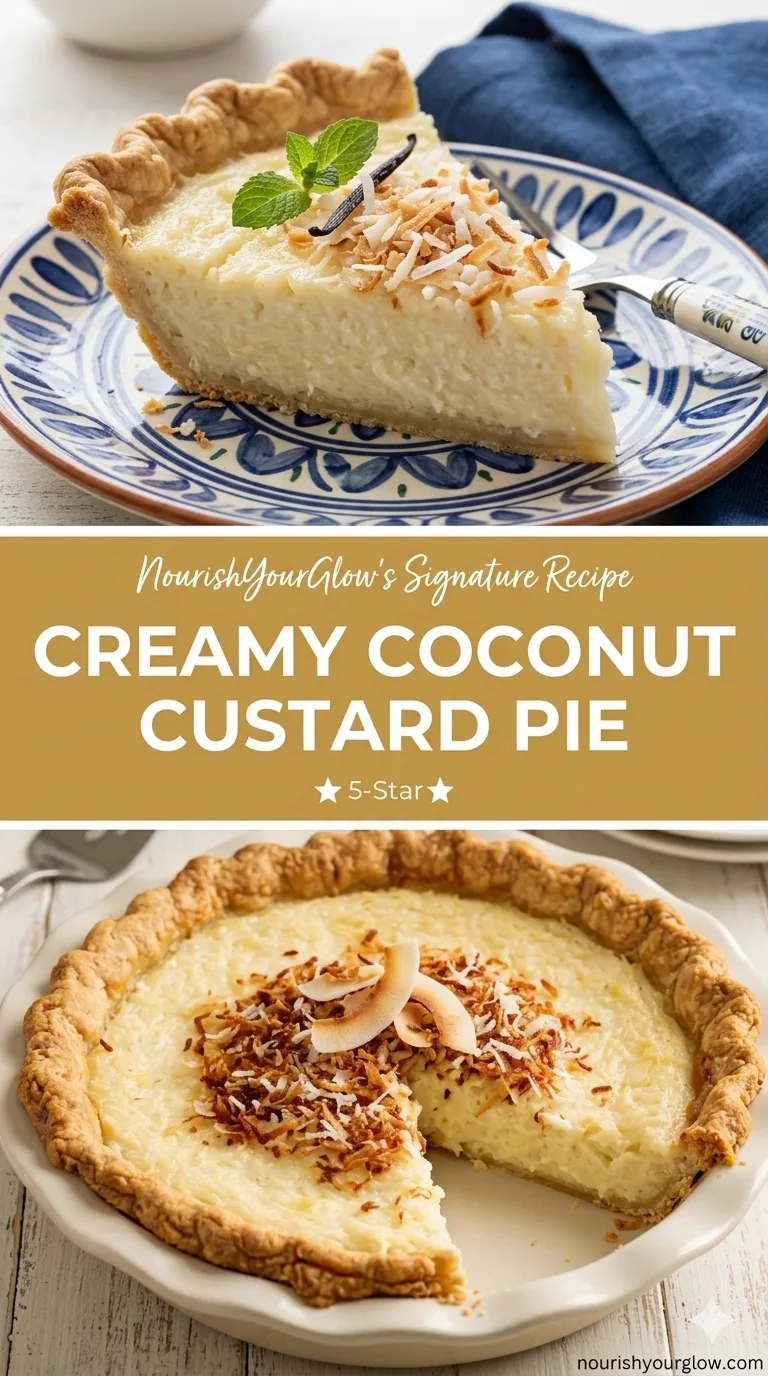
Coconut custard pie is a rich, creamy dessert that blends simple ingredients into a smooth, satisfying treat. In this complete guide, you’ll learn how to make the perfect coconut custard pie, avoid common mistakes, and explore variations and serving ideas. Whether you’re a beginner or experienced baker, this coconut custard pie recipe delivers consistent, delicious results every time.
Coconut Custard Pie Story & Why You’ll Love It
A Personal Story Behind Coconut Custard Pie
Hey there! I’m Carla, the chef behind PeakFit Recipes, and coconut custard pie holds a special place in my kitchen journey. I remember trying to create desserts that felt comforting but not overly complicated. At first, my custard pies turned out too runny or overly dense. However, after experimenting with ingredients and techniques, I discovered the perfect balance. This coconut custard pie became one of my go-to recipes because it combines simplicity with incredible flavor. It reminds me that great food doesn’t need to be complicated—it just needs the right approach.
Why Coconut Custard Pie Is So Popular
Coconut custard pie stands out because of its creamy texture and rich flavor. First, the custard filling creates a smooth and satisfying bite. Then, the coconut flakes add texture and a slightly nutty taste.
How to Make Coconut Custard Pie
Ingredients for Coconut Custard Pie
To prepare a classic coconut custard pie, you will need:
- 1 ½ cups sugar
- ½ cup butter
- 2 eggs
- 2 tbsp flour
- 1 cup milk
- 1 cup flaked coconut
- 1 tsp vanilla extract
- 1 unbaked pie crust
These ingredients combine to create a rich and smooth coconut custard pie filling.
Step-by-Step Preparation Method
- Preheat oven to 350°F and prepare your pie crust.
- Beat sugar, butter, and eggs until smooth.
- Add flour and mix well.
- Slowly incorporate milk to create a smooth mixture.
- Stir in coconut flakes and vanilla extract.
- Pour filling into pie crust.
- Sprinkle extra coconut on top.
- Bake for 40–50 minutes until the center sets.
Because the filling sets during baking, the coconut custard pie develops its signature creamy texture.
Tips, Types, and Serving Ideas
Common Mistakes When Making Coconut Custard Pie
One common mistake is underbaking the coconut custard pie. This causes a runny center. Always ensure the middle is slightly firm before removing from the oven.
Another mistake involves overmixing. This can affect the texture and make the custard less smooth. Also, avoid using too much liquid, as it prevents proper setting.
Skipping cooling time is another issue. Coconut custard pie needs time to firm up after baking.
Different Types of Coconut Pie
Coconut custard pie is one of several coconut desserts. Coconut cream pie uses a cooked filling that is chilled, while coconut custard pie bakes directly in the crust.
There are also tropical variations that include pineapple or citrus flavors. Each type offers a unique twist, but coconut custard pie remains a classic favorite.
Storage, Variations, and Nutrition
Storage and Make-Ahead Tips
Store coconut custard pie in the refrigerator for up to 4 days. Because it contains eggs and milk, refrigeration is essential.
You can also prepare coconut custard pie ahead of time. In fact, chilling enhances the flavor and texture.
Healthy Variations and Nutrition
Coconut custard pie can be adjusted for lighter options. You can reduce sugar or use low-fat milk. However, balance is key to maintaining flavor.
Approximate nutrition per serving:
- Calories: 447
- Fat: 24g
- Carbs: 56g
- Protein: 5g
1. What Makes Coconut Custard Pie Different from Other Pies
Coconut custard pie stands out because of its baked custard filling that sets inside the crust. Unlike other desserts, coconut custard pie does not require a pre-cooked filling. Instead, the mixture bakes directly in the oven, creating a smooth and creamy texture.
Another key difference is the use of eggs as a base. Eggs help the coconut custard pie firm up while maintaining a soft and silky consistency. In comparison, cream pies rely on thickened mixtures cooked on the stovetop.
Because of this baking method, coconut custard pie offers a more traditional and homemade feel. Its texture sits perfectly between a firm pie and a creamy dessert, making coconut custard pie unique and satisfying.
2. The Science Behind a Perfect Coconut Custard Pie
Understanding the science behind coconut custard pie helps you achieve better results. The custard forms when eggs combine with milk and sugar, then set under heat.
As the coconut custard pie bakes, proteins in the eggs coagulate, which thickens the filling. At the same time, the liquid ingredients transform into a smooth custard. This process requires precise temperature control.
If the coconut custard pie bakes too quickly, the custard may curdle. On the other hand, if it bakes too slowly, it may not set properly. Therefore, maintaining the correct oven temperature ensures a creamy and stable coconut custard pie.
3. Best Crust Options for Coconut Custard Pie
Choosing the right crust plays an important role in coconut custard pie. A classic pie crust provides structure and a slightly crisp texture that contrasts with the creamy filling.
Selecting the right crust enhances the overall experience of coconut custard pie.
4. How to Tell When Coconut Custard Pie Is Done
Knowing when your coconut custard pie is fully baked is essential. The center should appear set but still slightly jiggly. This indicates that the custard will firm up as it cools.
If the coconut custard pie looks completely firm in the oven, it may already be overbaked. Overbaking can lead to a rubbery texture.
You can also insert a knife near the center. If it comes out clean, the coconut custard pie is ready. Always allow the pie to cool before slicing, as this final step completes the setting process.
5. Flavor Enhancements for Coconut Custard Pie
While coconut custard pie already tastes rich, you can enhance its flavor with simple additions. Vanilla extract deepens the overall taste, while nutmeg or cinnamon adds warmth.
You can also toast the coconut flakes before adding them. This step brings out a nutty flavor that complements the custard.
For a tropical twist, consider adding pineapple or lime zest. These ingredients brighten the flavor and create a refreshing version of coconut custard pie.
6. Coconut Custard Pie for Special Diets
Coconut custard pie can be adapted for different dietary needs. For a lighter version, you can use low-fat milk or reduce sugar. These changes help lower calorie content without sacrificing too much flavor.
For gluten-free diets, simply use a gluten-free pie crust. You can also experiment with dairy alternatives like coconut milk, which enhances the coconut flavor even more.
These adjustments make coconut custard pie accessible to a wider audience while maintaining its signature taste.
7. History and Origin of Coconut Custard Pie
Coconut custard pie has roots in traditional custard desserts that date back centuries. Custard-based recipes became popular because they used simple, affordable ingredients.
Coconut was later introduced as an ingredient through trade routes, especially in tropical regions. Over time, bakers began combining custard with coconut, creating what we now know as coconut custard pie.
Today, coconut custard pie remains a staple in American baking. Its timeless appeal comes from its balance of simplicity and rich flavor.
8. Why Coconut Custard Pie Is Perfect for Any Occasion
Coconut custard pie fits almost any event. Because it is easy to prepare, it works well for everyday desserts. At the same time, its creamy texture and appealing look make it suitable for celebrations.
You can serve coconut custard pie at holidays, family dinners, or casual gatherings. It also pairs well with coffee or tea, making it a great afternoon treat.
Since coconut custard pie can be made ahead of time, it reduces stress when planning events. This convenience makes it one of the most practical desserts to prepare.
FAQ Section
What are the different types of coconut pie?
Coconut custard pie, coconut cream pie, and tropical coconut pies are the most common types.
How to make coconut pie?
Mix ingredients, pour into crust, and bake until the custard sets.
What are the ingredients in coconut pie?
Eggs, milk, sugar, butter, coconut flakes, and vanilla extract.
What is the difference between coconut cream and coconut custard pie?
Coconut cream pie is chilled with a cooked filling, while coconut custard pie is baked.
Does coconut custard pie need to be refrigerated?
Yes, refrigeration is necessary due to dairy and eggs.
Does Walmart sell coconut custard pie?
Yes, many stores offer it, but homemade coconut custard pie tastes fresher.
What happened to Entenmann’s coconut custard pie?
Availability varies by region and demand.
Conclusion
Coconut custard pie is a timeless dessert that combines simplicity with rich flavor. With its creamy texture and easy preparation, it remains a favorite for many. By following the right steps and avoiding common mistakes, you can create a perfect coconut custard pie every time. Whether for family dinners or special occasions, this recipe delivers consistent and satisfying results.
PrintCoconut Custard Pie – Easy Creamy Homemade Classic Recipe
Classic coconut custard pie with creamy texture and rich flavor.
Ingredients
sugar
butter
eggs
flour
milk
coconut flakes
vanilla
pie crust
Instructions
1. Preheat oven
2. Mix ingredients
3. Pour into crust
4. Bake until set
5. Cool before serving
Notes
Cool completely before slicing
If you love easy weeknight dishes, check out my Air Fryer Lemon Pound Cake or these simple Air Fryer Donut Holes. Both are proof that small tools can create big flavor.
FORE MORE RECIPES VISIT US IN FACEBOOK